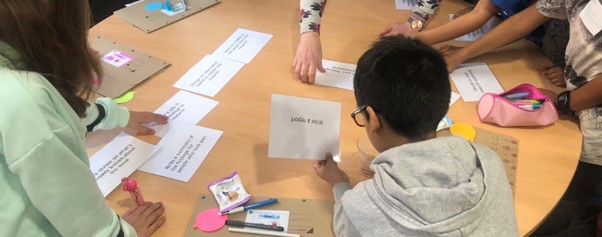
The group comes together 3-4 times a year to ensure that research in the BRC is relevant, useful and impactful to people who live with eye and vision conditions.
Their founding is a powerful illustration of the value of partnership working – bringing together advisory, delivery and facilitatory skills from NHS trusts and research and innovation functions from across UCLPartners.
Creating the group
The group’s formation was initiated by a meeting of the minds of Annegret Dahlmann-Noor, a consultant at Moorfields Eye Hospital, and Jacqueline (Jacq) Miller, a children’s research nurse working at the hospital. Both wanted to involve and engage patients and the public more meaningfully to support their clinical and academic work. Annegret visited a similar group at Great Ormond Street Hospital NHS Foundation Trust (GOSH), funded by the NIHR GOSH BRC, and was inspired to bring the YPAG model to Moorfields. Meanwhile Jacq, who had previously worked with the GOSH YPAG, had met with families and clinicians at Moorfields in November 2018, to gain their ideas, preferences and input for establishing her PhD Project advisory group.
With the support of NIHR Moorfields BRC, together with Dr Louca-Mai Brady, a senior researcher and public involvement advisor specialising in young people, EyeYPAG was launched in March 2019. The EyeYPAG subsequently linked in with the Generation R Alliance, a nationwide young persons’ advisory group improving health through research.
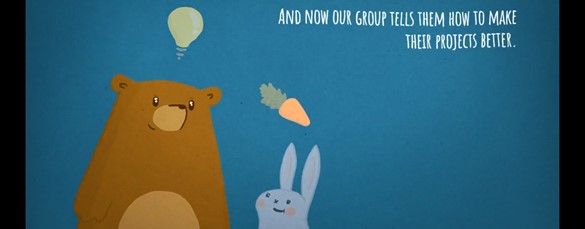
Video source: “Have you heard of our young person’s advisory group?” via Annegret Dahlmann-Noor
In their meetings, the group have scripted videos, used art to express themselves, and learnt more about eyes, vision and clinical research. They’ve advised researchers on how to deliver research in a child-friendly and engaging way. And they’ve lived up to their “co-production vibe”, including agreeing on a set of values and expressing them in a video that is played before every meeting:
So what’s been the outcome? Overall, research has changed. For example, the young people did not want their clinical data accessed by researchers without their knowledge, leading to a change in research protocol design. In another situation, the young people argued for fewer monitoring visits during one research project, since these were negatively affecting their school lives.
For the researchers taking part, Annegret has realised how much young people’s activities and priorities differ from those of adults. She’s also been touched by how strong the group’s drive has been to make research better and more accessible to young people – and to help others.
“You have to think so hard…..Who will benefit from all the work that goes into the research project and from the time that the children and the parents will contribute to that project? So all the research that is meaningful to researchers only, but not relevant to families goes out of the window straight away when you have their scrutiny as a filter.” – Annegret Dahlmann-Noor
Jacq also highlights how much she has learnt about co-production, especially through conversations around co-designing the EyeYPAG Logo and establishing the group’s shared agreements.
“I am always so blown away by the way the group work together as a team.…They don’t always agree with each other, but it is fascinating to watch and support as they successfully work through a subject and the decision-making process.” – Jacq Miller
And for the young people, they’ve gained power and found their voice. They write and share records of their work, such as the story from eyeYPAG, and provide an example of best practice for others in the sector. Working in arts and design has bought them together as a group and as friends, and they are, in the words of one member of the group, “more willing to share ideas with people we know better”. Investing time and resource in the development and relationships of the group has paid off.
“There is no imbalance of power – when everyone is working together, we have more power” – Young person involved in the EyeYPAG
“We learn from researchers and researchers learn from us” – Young person involved in the EyeYPAG
For more information on the group’s impact, a two year evaluation was written by a group of young evaluators and Louca-Mai herself. They found that researchers came to the group because they wanted help planning their research, and benefits for their work included improved research plans and methods, exploring new perspectives and ideas, learning new things – and even having fun!
The EyeYPAG is a great example of how patient and public involvement expertise crosses boundaries – and of the value of being able to develop relationships and build bridges with people from organisations and backgrounds different from your own.
It’s these sorts of connections that UCLPartners wants to support among members. One way we do this is through the work of the Patient and Public Involvement and Engagement (PPIE) committee, which brings together representatives from across UCLPartners to identify and maximise opportunities for beneficial collaboration in PPIE activities and programmes, and to share insights and learning. The UCLPartners PPIE team also directly supports PPIE in health and care research and innovation – please get in touch on ppie@uclpartners.com if you would like to find out more.
To provide the best experiences, we use technologies like cookies to store and/or access device information. Consenting to these technologies will allow us to process data such as browsing behavior or unique IDs on this site. Not consenting or withdrawing consent, may adversely affect certain features and functions.
Functional
Always active
The technical storage or access is strictly necessary for the legitimate purpose of enabling the use of a specific service explicitly requested by the subscriber or user, or for the sole purpose of carrying out the transmission of a communication over an electronic communications network.
Preferences
The technical storage or access is necessary for the legitimate purpose of storing preferences that are not requested by the subscriber or user.
Statistics
The technical storage or access that is used exclusively for statistical purposes.The technical storage or access that is used exclusively for anonymous statistical purposes. Without a subpoena, voluntary compliance on the part of your Internet Service Provider, or additional records from a third party, information stored or retrieved for this purpose alone cannot usually be used to identify you.
Marketing
The technical storage or access is required to create user profiles to send advertising, or to track the user on a website or across several websites for similar marketing purposes.